
AI-based glass breakage inspection for the highest quality
Safety and precision in pharmaceutical production
Glass breakage in vials, ampoules or prefilled syringes is one of the most critical quality risks in pharmaceutical production. Even the smallest cracks or micro-defects can compromise the sterility of the product and lead to costly recalls.
With the GBD 650 we offer you an AI-based solution that reliably detects even the finest damage – fast, objective and with the highest precision.
How the GBD 650 works
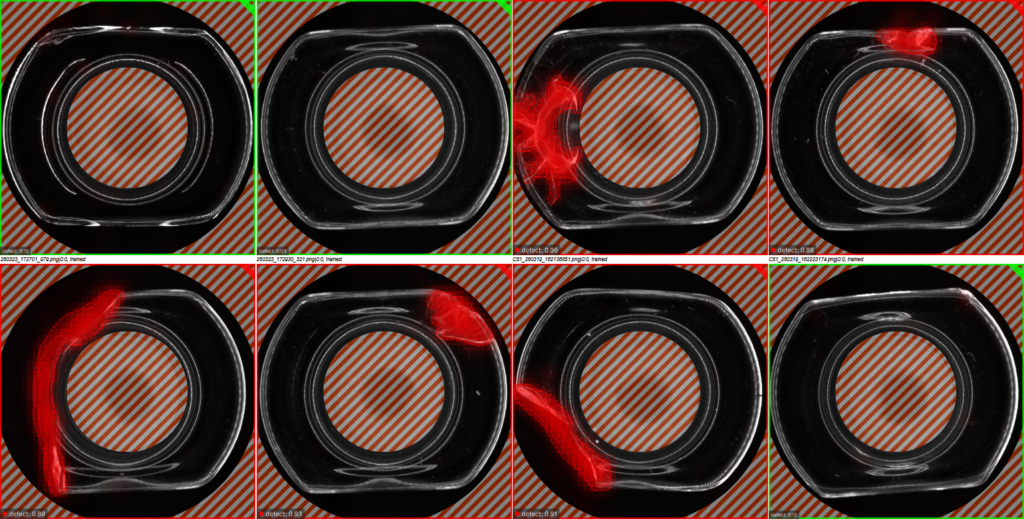
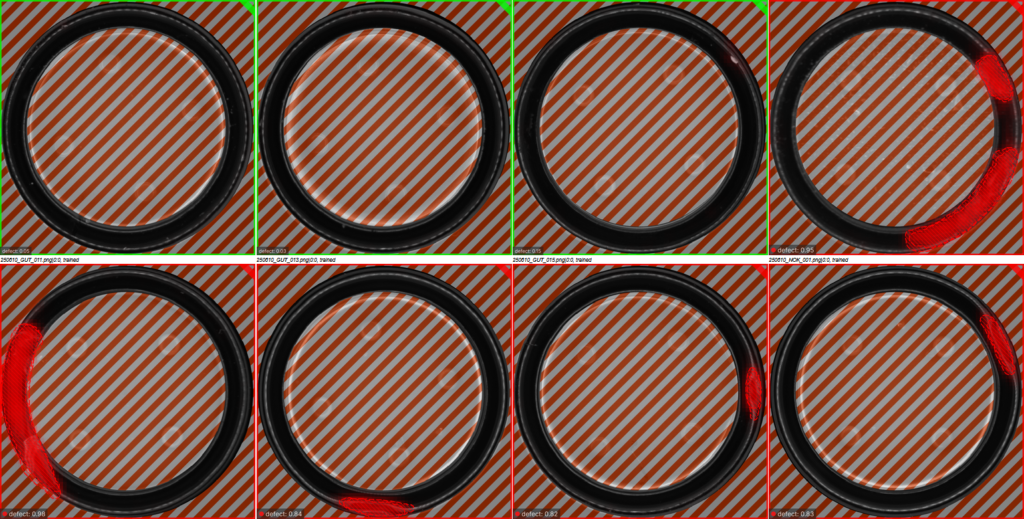
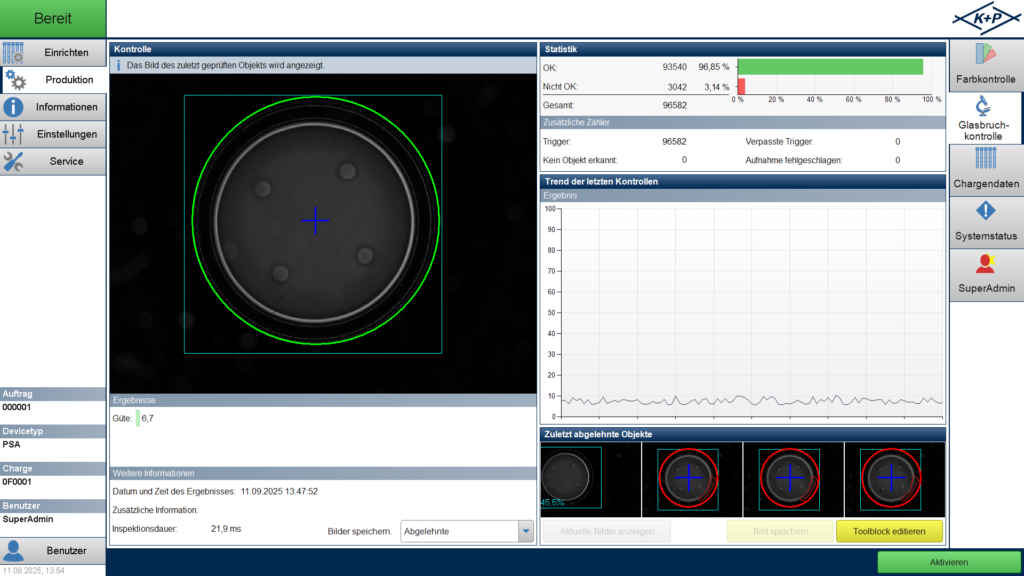
The GBD 650 uses state-of-the-art computer vision technology and powerful deep learning algorithms. Each glass container is illuminated and analyzed from several perspectives. The system identifies not only obvious breaks but also detects microscopic cracks, stress cracks and surface defects that often escape manual visual inspection.
Your benefits
- Maximum detection reliability: Highest detection rate even for the smallest, hard-to-see defects.
- Risk minimization: Significant reduction of faulty shipments and costly recalls.
- Highest objectivity: Reproducible and fully documentable inspection results, independent of the operator.
- High-speed performance: Optimized for use in high-speed production lines.
- Audit-ready: Complete traceability of all inspection operations in line with EU GMP and FDA requirements.
Technical highlights
- AI-supported image processing: High-performance deep learning models for maximum defect detection.
- Precise sensor technology: Use of several high-resolution industrial cameras with application-specific illumination.
- Seamless system integration: Full integration into our KUPvision software environment.
- Real-time processing: Immediate evaluation and automatic rejection of defective containers.
- Digital compliance: Complete logging of every single inspection operation.
Deep learning that stays qualifiable
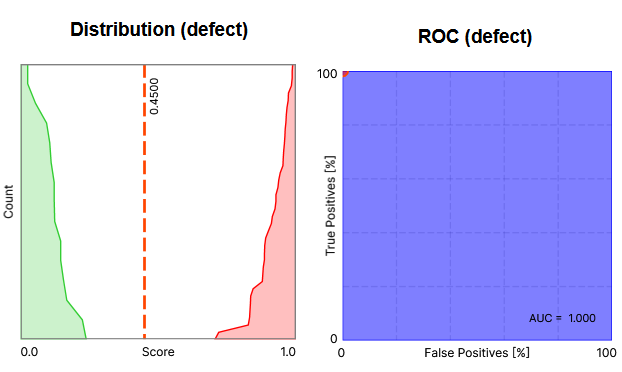
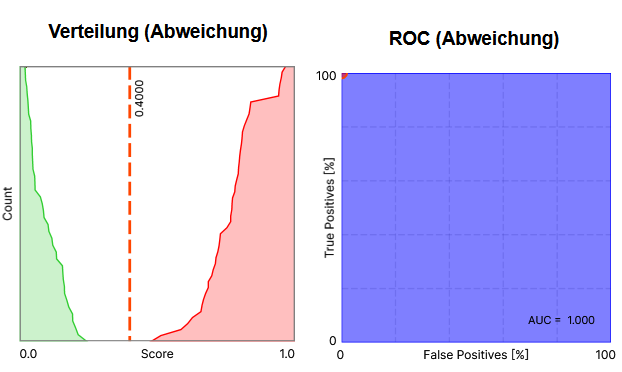
An AI model that decides on sterility must be able to do more than detect – it must be explainable in an audit. That is why we are already developing the GBD 650 along the draft of EU GMP Annex 22 (Artificial Intelligence):
- static, versioned models – no continued learning during operation
- separate training and test data
- acceptance criteria defined before testing
- logged confidence values for each inspection decision
- Change control with revalidation assessment on model or product change
When Annex 22 comes into force, your equipment should not have to be requalified.
Areas of application: particularly suited for:
The GBD 650 was developed specifically for demanding environments and is ideally suited for:
- Pharmaceutical production (vials, ampoules, prefilled syringes)
- Diagnostics manufacturing
- Medical technology with the highest quality requirements
- High-precision glass processing and filling technology