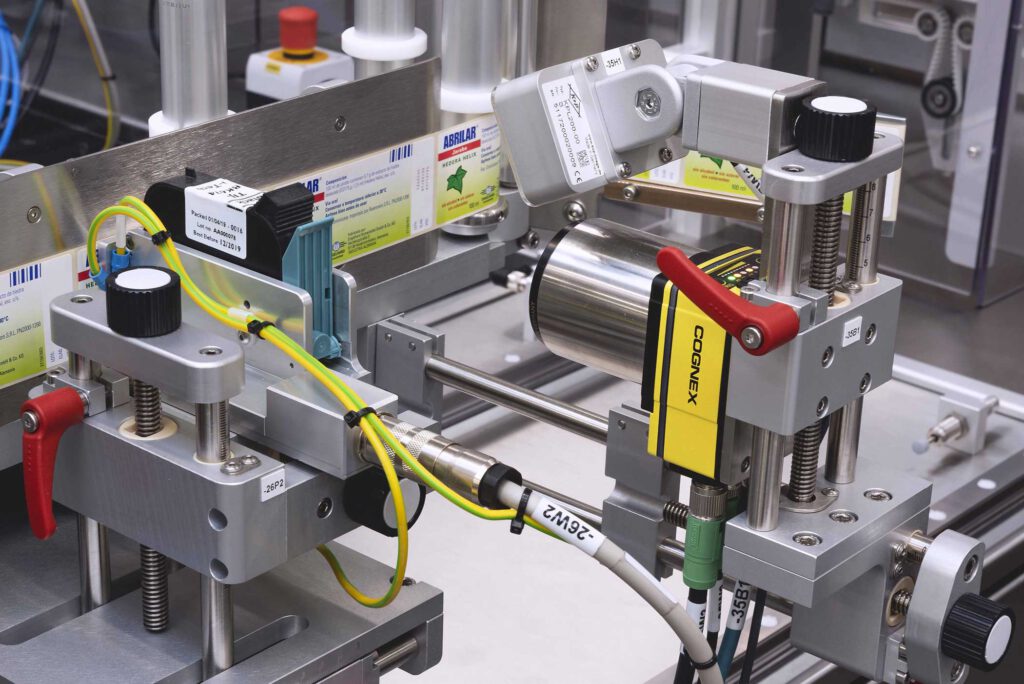
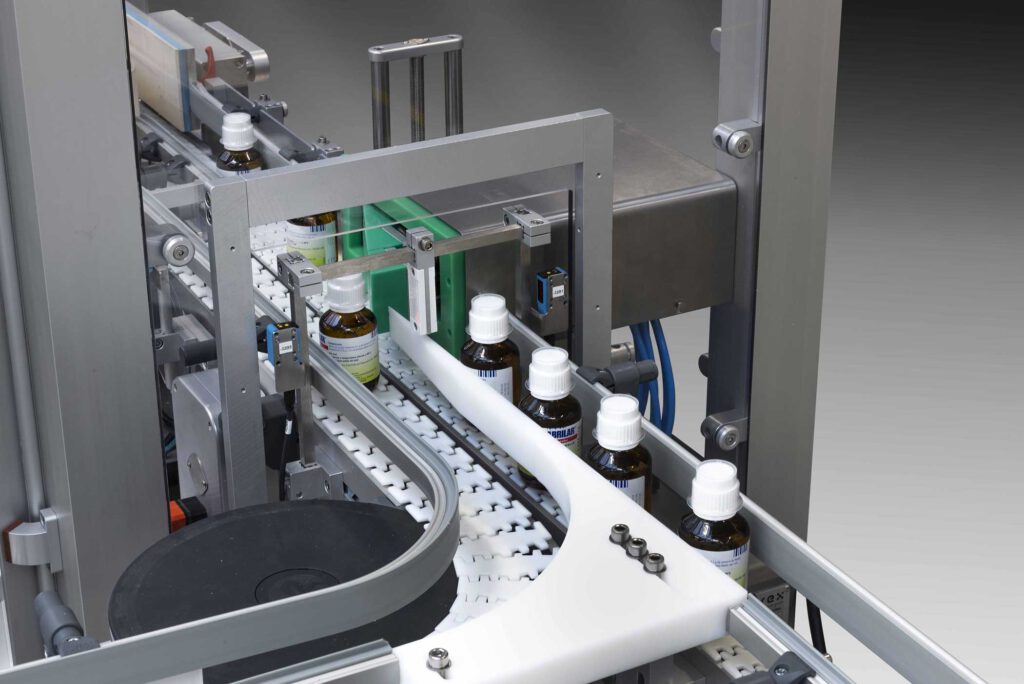
Track and Trace Pharma:
Does your code live up to what the supply chain expects of it?

Track and trace in the pharmaceutical industry does not begin in the database. It begins on the line. Where a 2D Data Matrix code is applied to a vial, an ampoule or a prefilled syringe, and where it is decided whether that code will later be readable, unique and verifiable.

INTREX develops inspection, marking and labeling systems for exactly this point. Inline, validatable and integrated into your running process. So that the traceability of your medicines does not fail because of an unreadable code, a missing security label or incomplete documentation.

track-and-trace-pharma-intrex-deutschland-3

What does track and trace mean in the pharmaceutical industry?

Track and trace describes the seamless tracking and tracing of a medicinal product – from the manufacturer through the wholesaler to dispensing at the pharmacy. Every single pack becomes uniquely identifiable. This makes it possible to determine at any time where a product comes from, which batch it belongs to and whether it is genuine.

Comparable requirements apply in many other markets, for example in the USA with the Drug Supply Chain Security Act. The direction is clear: requirements are increasing worldwide – and with them the expectations regarding precision and verifiability in production.

Two terms are often mentioned in the same breath: serialization means assigning a unique number to each pack. Track and trace means making this number usable across the entire supply chain. What matters: both only work if the code is physically perfect on the product – and has been verifiably inspected.

Where is it decided whether track and trace really works in day-to-day operation?

The serial number is created in the system. Whether it serves its purpose, however, is decided on the line. A code that cannot be read is worthless to the supply chain. A security label that sits crooked or is missing is a compliance risk. And an inspection that is not documented has not taken place as far as the audit is concerned.

What matters is not the serialization software alone. What matters is the code that actually ends up on the packaging. The critical point is therefore often not in IT, but in the physics of glass, label and print image.

Errors at this point are no trivial matter. They cost money, time and trust – through rejects, rework, delayed batch release and, in the worst case, recalls.
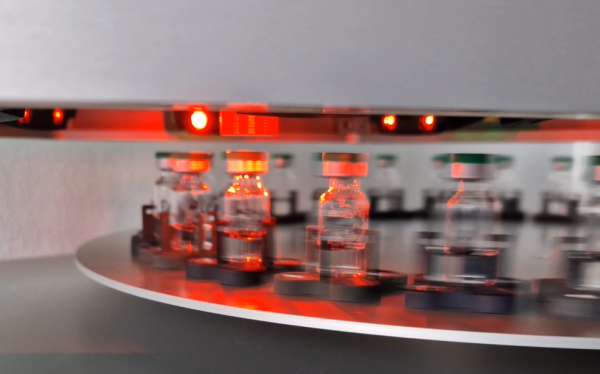
Track and trace in pharma production – code verification on the line by INTREX Deutschland

When codes sit on curved surfaces

Vials, ampoules and prefilled syringes are round, often small and made of reflective glass. The code is tiny, the surface reflects, and the container rotates during transport. Standard camera systems quickly reach their limits here.

When the line allows no downtime

High cycle rates, tight installation space, fixed product guidance: the line sets the rules. An inspection that slows down the process or constantly causes false rejects is not a solution – it is a new problem.

When tamper evidence must be applied reliably

The second safety feature is more than a sticker. A security label that is applied inaccurately at high speed does not fulfill its purpose. Application and process reliability belong together here.

When inspection must be audit-ready

In regulated pharmaceutical processes it is not enough for an inspection to work technically. It must be defined, reproducible, qualified and completely logged. Validatable inline quality control means: the inspection must work technically – and be able to prove its effectiveness at any time.
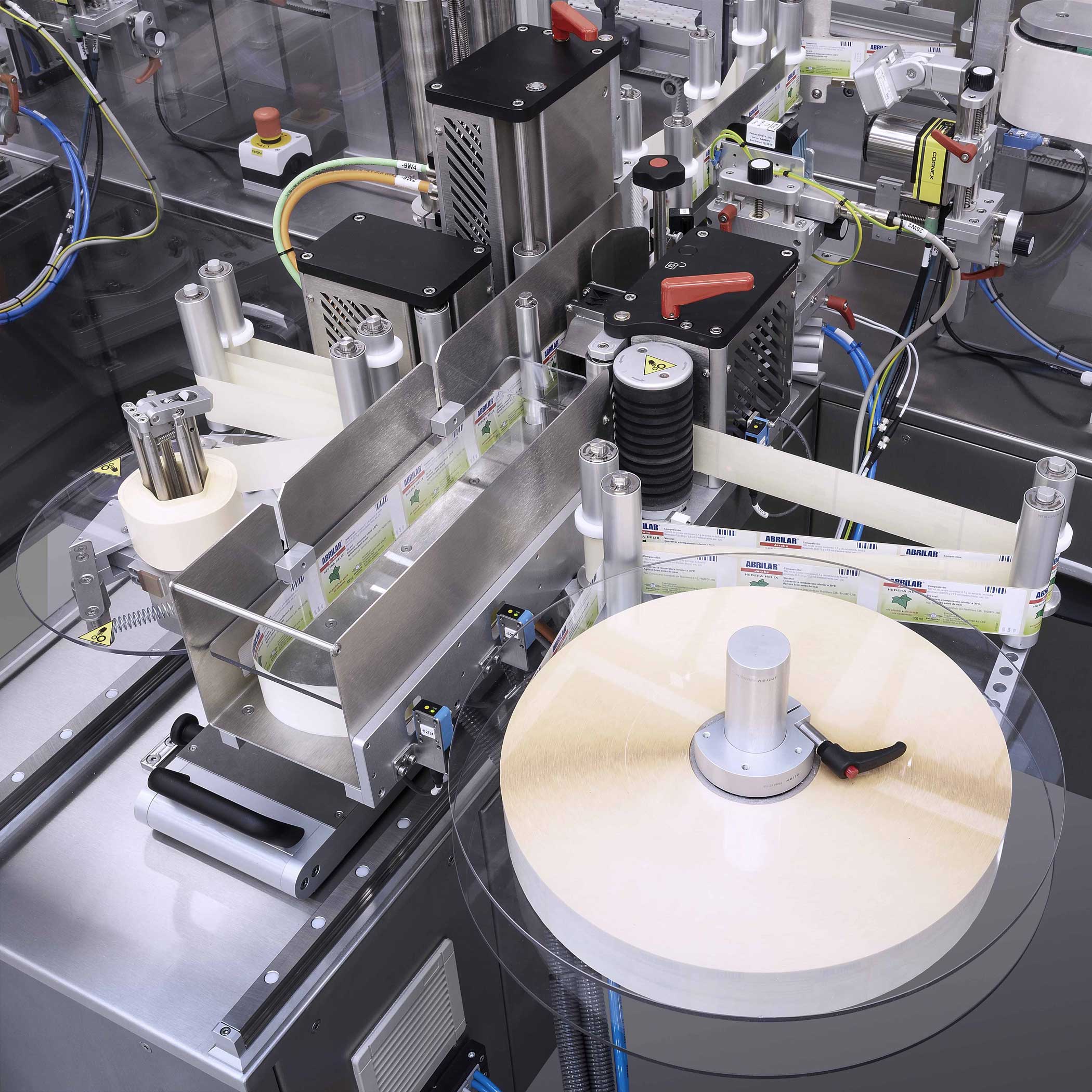
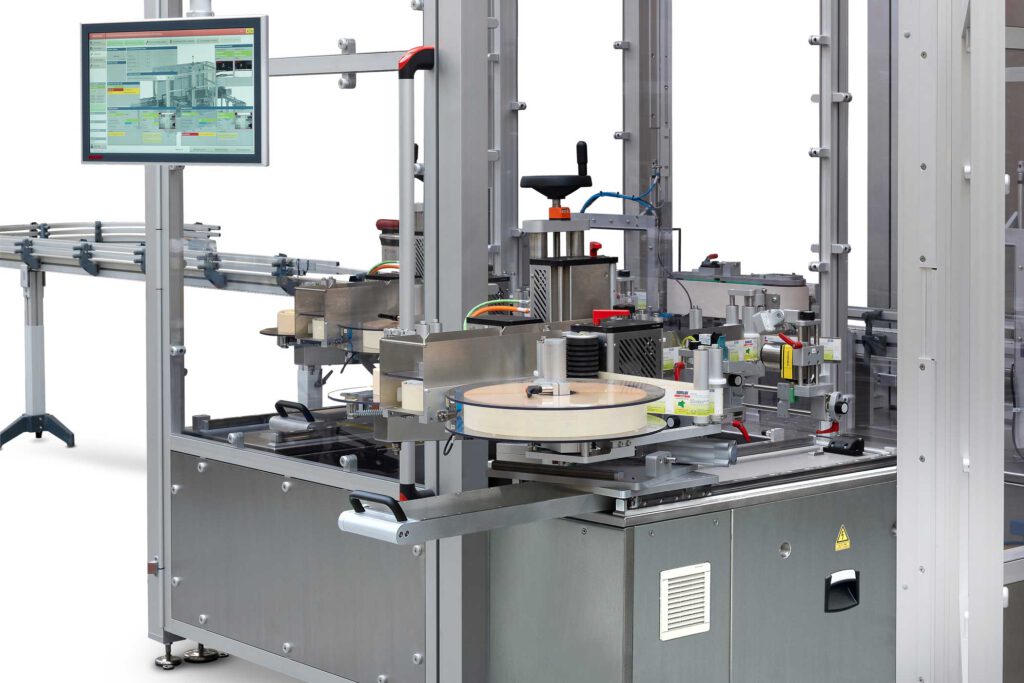
Inline inspection and labeling for track and trace in the pharmaceutical industry – INTREX Deutschland

What does INTREX contribute to your track-and-trace process?

INTREX is not a provider of serialization software. INTREX does not assign or manage serial numbers and does not connect to verification systems such as securPharm. INTREX starts at the physical, optical level: where data meets the product – with inspection, marking and tamper evidence in the running process.

Code verification with the Code-Lesung 360 vision system

With the Code-Lesung 360 vision system INTREX captures and verifies codes on vials, ampoules, prefilled syringes and other pharmaceutical containers – all around, inline and under real line conditions. Damaged or reflective codes are captured redundantly. The in-house developed KUPvision software evaluates the image data in real time, logs every result and can be connected to MES and ERP systems via interfaces.

Labeling and printing

The INTREX LSC-100 labels and prints blister packs. The INTREX NLS-200 combines non-stop labeling of bottles with integrated digital printing and automatic label inspection by camera system. Both systems link via barcode scan to product- and order-related information, for example from your ERP system.

Tamper evidence with the INTREX SET 2933

With the INTREX SET 2933, INTREX covers the second safety feature required by the EU Falsified Medicines Directive: security labels in L or U fold make any opening of the pack visible – at speeds of up to 400 labels per minute.

AI-based image processing

At INTREX, AI is not a buzzword. AI is a tool.INTREX uses it where classic rules reach their limits – with surface variations, complex patterns or glass breakage inspection. Always embedded in a process that remains validatable.

Special solutions for special inspection tasks

When catalog technology reaches its limit, INTREX develops the right solution: from a single inspection station to a complete special machine. Mechanics, camera technology and software come from a single source.

track-and-trace-pharma-intrex-deutschland-4

Why is validatable inspection more than a checkbox in the requirements specification?

Because in an audit only what is documented counts. INTREX comes from the toughest discipline: regulated pharma and life science processes. The INTREX inspection and labeling systems are developed in accordance with EU GMP, GAMP 5 and Annex 11 of the EU GMP Guide.

Based on your user requirements specification (URS), INTREX delivers the complete qualification documentation for DQ, IQ, OQ and PQ. For AI-based image evaluation, INTREX already follows the draft of Annex 22 today. This way, validation does not become a laborious task afterwards but is part of the solution from the start.

What do you gain when inspection and labeling work hand in hand?

Track and trace is strong when every link in the chain holds. With INTREX on your line you gain:

  • Reliable code detection– even for the smallest codes on curved, reflective surfaces

  • Fewer rejects and lower recall risks– through early error detection directly in the process

  • Stable line processes– inspection that adapts to cycle rate, installation space and product guidance

  • Audit-ready documentation– every inspection logged in a traceable way

  • One point of contact– for mechanics, camera technology, software and validation

  • Integration instead of stand-alone solutions– connection to MES and ERP systems via interfaces

What does this look like in practice?

An international pharmaceutical customer faced the task of reliably capturing, analyzing and documenting the smallest QR codes on vials – inline, under real line conditions and with the verifiability that regulated pharmaceutical processes demand.

INTREX implemented 360-degree capture in the running production process, combined with customer-specific software logic and audit-ready documentation.

The result: reliable code detection on curved surfaces, reduced reject and recall risks and more stability in critical line processes.

How does your inspection task become a working solution?

Every project begins with a question: what exactly needs to be inspected, marked or documented on your line – and under which conditions? From the answer, a clear process emerges:

  1. Understand the inspection task:We analyze containers, codes, cycle rates, installation space and regulatory requirements – together with your team, right at the reality of your line.

  2. Develop the concept:We define the inspection architecture: image processing, software logic and product guidance, tailored to your process.

  3. Implement and integrate:Mechanics, camera technology and software come from a single source and are integrated into your line mechanically as well as on the software side.

  4. Qualify and commission:Qualification is considered from the start – not only at the end. We provide the documentation for DQ, IQ, OQ and PQ and support commissioning on your line.

  5. Provide long-term support:Even after commissioning we remain your point of contact when formats, products or requirements change.

The result: technical precision with economic impact.

Why do pharmaceutical manufacturers trust INTREX for critical inspection processes?

Because INTREX does not start with the catalog, but with the inspection task. INTREX has its roots in industrial marking and brings more than 30 years of experience with marking and inspection systems. The interdisciplinary team of engineers, technicians and project managers in Hamburg combines mechanical engineering, industrial image processing and in-house software development.

INTREX develops solutions from the reality of production – not from an isolated requirements specification. What matters is safe integration into the running process. Responsibility is more important than catalog breadth.

Frequently asked questions about track and trace in pharmaceutical production

What is the difference between serialization and track and trace?

Serialization assigns a unique serial number to each pack. Track and trace uses this identification to follow the product across the entire supply chain and to verify its authenticity. Both require that the code is applied and verified flawlessly.

No. INTREX does not offer serialization software or a connection to verification systems such as securPharm. INTREX supplies the inspection, labeling and tamper-evidence systems on the line. Which interfaces to your MES or ERP systems make sense is clarified together in the project.

The INTREX code verification is designed for vials, ampoules, prefilled syringes and other pharmaceutical containers. In addition there are labeling and printing systems for blisters and bottles as well as security labels for tamper evidence of packaging.

Yes. The INTREX solutions are developed from the reality of your line – cycle rate, installation space, product guidance and interfaces are the starting points of development, not hurdles added afterwards.

Yes. The systems are developed in accordance with EU GMP and GAMP 5. INTREX prepares the qualification documentation for DQ, IQ, OQ and PQ based on your URS.

AI complements classic image processing where fixed rules are not sufficient – for example with fluctuating surfaces, reflections or complex defect patterns. What matters is that the AI-based evaluation remains traceable and validatable. That is why INTREX follows the draft of Annex 22.

The earlier an error is detected, the smaller the damage. An inline inspection detects faulty codes or labels directly in the running process, rejects the affected units in a targeted way and documents every operation. This way faulty packs never reach the supply chain.

How reliable is your code verification today – and how reliable should it be tomorrow?

Let's talk about your requirements. Tell us which containers, codes and cycle rates define your line – INTREX will show you how validatable inline inspection, marking and tamper evidence secure your track-and-trace process.